In this dream world

We doze

And talk of dreams —

Dream, dream on,

As much as you wish


- Ryōkan (1758–1831), translated by John Stevens


It is never too late for a woman in her fifties to take on a magic carpet ride and explore the places she’s been longing to see. A decade ago, I began my journey and was allured by the charm of Southeast Asia. Then in 2015, my carpet danced to the music of the flowers of spring in East Asia. The sudden drop of temperature during my eleven-day visit to Japan caught me by surprise, but my flesh could not find any reason to whine. Full-bloomed cherry blossoms refreshed my soul. And as the days went by, I became a silent audience to the graceful falling of cherry blossom petals with every blow of cold breeze. To my imaginative eyes, the petals were ballerinas in pink and white tutus pirouetting as the air hummed some sweet Japanese melodies.

Magic Carpet

Magic Carpet

Sunday, April 3, 2016

A Year Ago in Japan

The memories of my visit to Japan in the spring of 2015 are lovingly kept in my mind. I just didn’t have the time and the proper mood to write about them, but my magic carpet is pushing me to continue where I have left off. So here I am sharing the chronicles of my visit to the Land of the Rising Sun exactly a year ago today.


AWAJI-SHIMA’S APRIL SONATA
From Kobe, we crossed the Akashi Kaikyō Bridge for our trip to Awaji Island. It is the world’s longest suspension bridge (3,911 meters) that links Awaji Island to Kobe in Hyogo Prefecture. The biting afternoon sea breeze welcomed us at the Awaji Service Area. But never mind the chills because the whole stretch of the Akashi Kaikyō Bridge could be viewed closely from this place. As some observers noted, the bridge is “one of the greatest triumphs of Japan in the field of engineering”.
Upon arrival in our room at The Gran Resort Elegante Awajishima, my daughter and I changed into traditional yukata, a casual kimono provided by the hotel, and headed for the dining area for a quiet traditional Japanese cuisine or Kaiseki dinner.  To complete our unhurried day, we went up to the public bath and immersed in hot spring pool while peacefully gazing at the panoramic night view through the bath’s wide clear glass panels. I seized that present moment.

I greeted the light of day on a cold spring morning with a delightful hot bowl of Awaji onion soup. The onions produced in the island are extraordinarily big and sweet. I bought some delicious instant Awaji onion soup packs for my family in the Philippines.

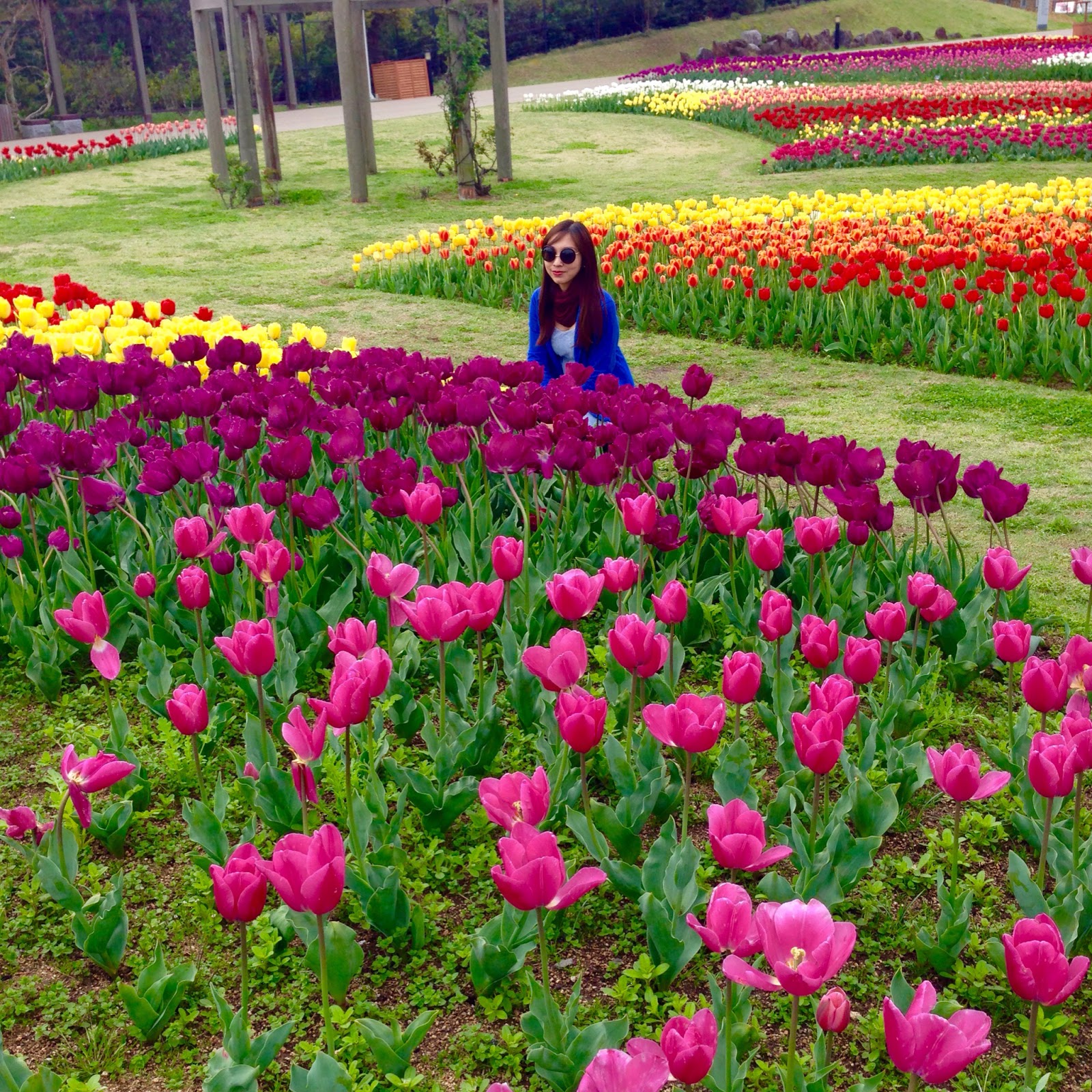
Flowers in full regalia danced gaily at the Awaji Yumabutai Botanical Garden. Tulips of different varieties were abloom.  Indeed, the sprightly color palette of nature in Yumebutai is like eternal bliss that resonates an utter joy to the soul.
                

 My daughter at the Awaji Service Area overlooking the Akashi Kaikyō Bridge


 My daughter and I wearing yukata for a Kaiseki dinner at the The Gran Resort Elegante Awajishima.


The flowers at the Awaji Yumabutai Botanical Garden


A pack of instant Awaji onion soup


Monday, May 25, 2015

Bitter-sweet DUET


Simple pleasure is derived from every sip of green tea and a bite of traditional Japanese confectionary called higashi. The duo is often served in tea ceremony. Higashi is made from wasanbon, a premium fine-grained Japanese sugar. It comes in floral shape or any timely symbols of the seasons in Japan.


This is the theme of my blog’s header and my Facebook’s cover photo. A friend from Tokyo gave me two boxes each of higashi and green tea. I arranged the higashi neatly on a green tea color paper and requested my artist son to take photos. He also designed the logo using modern typography. Just like Japan, my header/cover photo is a mix of the old and the new. 


Green tea and higashi, traditional and modern, me and my son. I do believe good things come in twos.


Sunday, May 24, 2015

Serenades of Nara and Kyoto

In the ancient cities of Japan, nature swayed to the slow rhythm of the wind. The temples, shrines, parks, people and food inevitably beckoned and my heart followed the dynamics of each note. I was in awe of the massive splendor of the Tōdai-ji and Yakushiji temples in Nara and the Kiyomizu and Kinkakuji Temples in Kyoto.

    Yakushiji Temple, Nara


Tōdai-ji Temple, Nara


 Lunch at Shizuka Restaurant in Nara City was a feast to remember. The main course was a flavorful serving of kamameshi or “pot meal”.  It blended pretty well with the cozy ambiance inside and the drizzly weather outside. I noticed a number of tables with two or three Japanese women enjoying the food and soft conversations. I later learned that Japanese women, especially those in their fifties or older are fond of having small get-togethers at restaurants for lunch.


For dinner, we tried out the resto bar Suicakuri in Saidaiji, Nara City. It has a seating capacity of about ten to twelve. The place, food and drinks were orchestrated in perfect harmony by a one-woman-band, Tomoko-san. No wonder, it has become a regular stress-relieving destination for people who have had a long day at work.


   Kiyomizu Temple, Kyoto


    Kinkakuji Temple, Kyoto


On the way to Kiyomizu Temple,I could not resist the temptation of the food on display at the Gion Tamejiro restaurant. A meal of Yuba-Don was worth the stop. It's a bowl of rice topped with yuba (tofu skin) with seasoned ground chicken on the side, grated carrot, potato and kudzu (Japanese arrowroot) sauce


Saturday, May 23, 2015

Spring Breeze in the East


ALLEGRO IN TOKYO

The lively tempo was everywhere in Tokyo, be it in Shinjuku, Shibuya, Harajuku or Asakusa.  At Ueno Park, people joyously ate, drank, sang and chatted during the hanami, the annual cherry blossom viewing festival in Japan. In Japanese language, hana means flower and hanami means flower viewing.


A bowl of tonkotsu ramen at Darumanome restaurant in Shibuya eased the tiredness in my body from the endless walking around the city.


We had a taste of one of Japan’s pride, Amaou strawberries at Kyobashi Sembikiya, a fruit parlor and café in Harajuku.


My greatest tofu experience happened at Tofuya Shiba Ukai, just beside the Tokyo Tower. The restaurant serves traditional Japanese Kaiseki cuisine with tofu dishes as its specialty.  The Kaiseki cuisine is a multi-course meal served in small portion. It is prepared meticulously and beautifully using fresh and seasonal ingredients. The artful presentation of food depicts the seasonal theme of the meal.